In a world driven by digital transformation and rising customer expectations, artificial intelligence (AI) is rapidly becoming a cornerstone of business innovation. Among the most revolutionary AI tools available today is ChatGPT, developed by OpenAI. This AI-powered language model has not only captured public interest but is also being widely adopted by businesses across sectors for a variety of applications.
But what exactly is ChatGPT, and why is it creating such a buzz in the business world? Let’s explore.
Understanding ChatGPT

ChatGPT is a conversational AI model built on the Generative Pre-trained Transformer (GPT) architecture. It’s trained on vast amounts of text data to generate human-like responses to user inputs. Essentially, it can understand questions, engage in dialogue, generate content, solve problems, and even carry out instructions with remarkable fluency.
The most recent version, GPT-4o, enhances the model’s performance further by improving contextual understanding, reducing errors, and generating responses that feel more natural, conversational, and intelligent.
Unlike traditional AI tools that perform limited functions, ChatGPT is versatile. Its ability to process natural language makes it a powerful assistant for both internal operations and external customer interactions.
How Businesses Are Using ChatGPT
1. Automating Customer Support
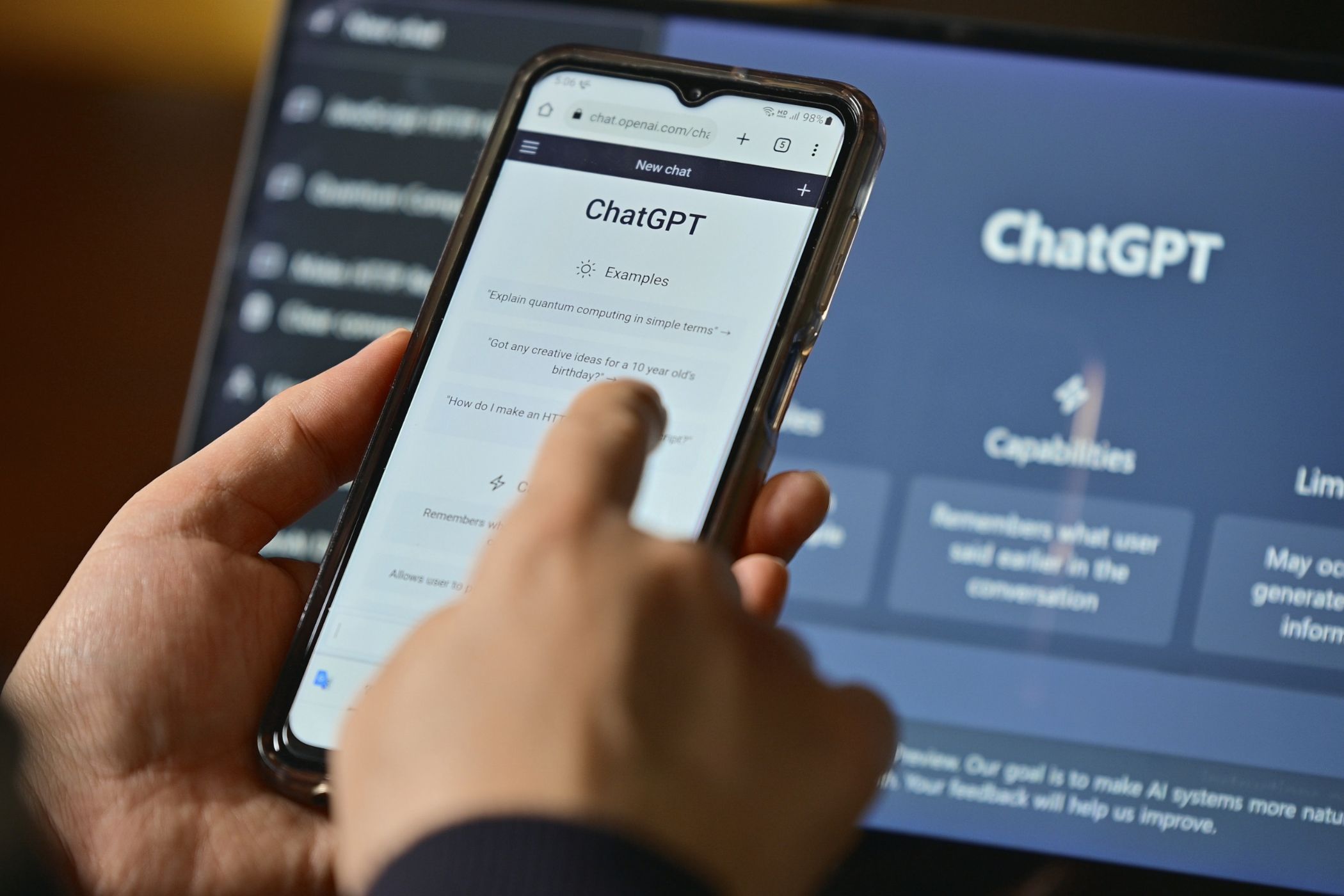
ChatGPT is revolutionizing how companies manage customer service. With its ability to instantly understand and respond to customer queries, businesses can deploy it as a chatbot to provide round-the-clock assistance. It can handle FAQs, resolve basic issues, and even escalate complex cases to human agents when needed.
This leads to faster resolution times, reduced customer frustration, and lower support costs all while maintaining service consistency.
2. Enhancing Content Creation
From startups to global brands, companies are using ChatGPT to streamline their content marketing. It can generate:
- Blog posts
- Product descriptions
- Social media captions
- Ad copy
- Email campaigns
Instead of spending hours brainstorming and editing, marketing teams now use ChatGPT to produce high-quality, brand-aligned content in minutes. The AI ensures tone consistency and can even optimize text for SEO boosting online visibility.
3. Boosting Sales and Lead Generation
Businesses are integrating ChatGPT with their websites, CRM systems, and chat platforms to assist in sales conversations. The AI can:
- Greet website visitors
- Answer pre-sale questions
- Recommend products or services
- Capture lead information
- Schedule meetings
This proactive engagement improves conversion rates and reduces drop-offs. It also ensures that no potential lead is missed, even outside business hours.
4. Training and Employee Onboarding
HR departments and learning teams use ChatGPT to assist with training and onboarding. The AI acts as a 24/7 internal assistant that new employees can interact with to:
- Understand company policies
- Learn procedures and tools
- Access training modules
- Ask real-time questions
This interactive and responsive experience enhances employee engagement and accelerates the learning curve.
5. Data Summarization and Decision Support
For executives and analysts, ChatGPT is a game-changer when it comes to summarizing large documents, reports, and datasets. Instead of sifting through dozens of pages, users can ask ChatGPT to extract key insights or present information in digestible bullet points.
From summarizing board reports to analyzing customer feedback, the AI helps teams make data-driven decisions faster and more confidently.
Real-World Examples
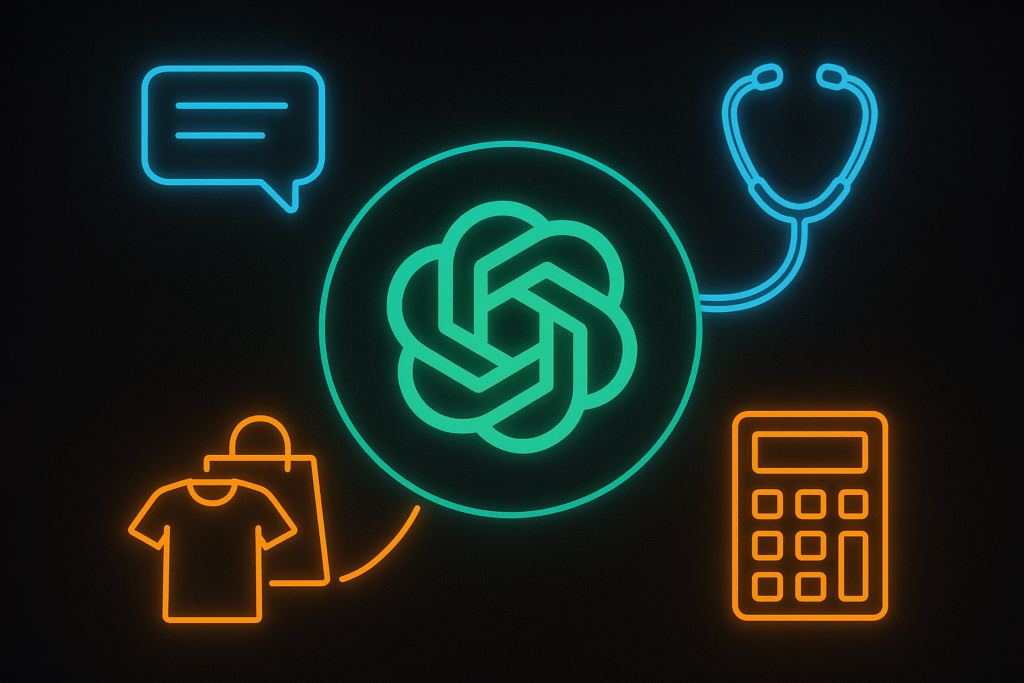
- E-commerce companies use ChatGPT to generate product descriptions and upsell items via automated chat.
- Healthcare organizations deploy it to answer patient inquiries and provide pre-appointment instructions.
- Financial firms leverage the tool for client communication, investment summaries, and internal training.
From solopreneurs to Fortune 500s, businesses are customizing ChatGPT to suit their specific needs and workflows.
Challenges and Considerations
While ChatGPT offers immense value, businesses should use it responsibly. Key considerations include:
- Data privacy: Avoid sharing sensitive or confidential data with AI tools.
- Bias mitigation: Ensure prompts and outputs do not reflect or reinforce harmful biases.
- Human oversight: Use ChatGPT as an assistant not a replacement for critical thinking and decision-making.
When integrated thoughtfully, ChatGPT can significantly enhance business performance without compromising integrity or quality.
The Future of ChatGPT in Business
ChatGPT and similar AI technologies are rapidly evolving. With capabilities expanding into voice, vision, and even emotional intelligence, the future holds even greater promise. We can expect:
- Multilingual support for global businesses
- Deeper integrations with tools like Slack, Notion, Salesforce, and HubSpot
- Personalized AI agents that learn your business tone and style
- Real-time analytics and AI-driven insights
Adopting tools like ChatGPT early gives businesses a competitive edge in efficiency, customer experience, and innovation.
Final Thoughts
ChatGPT is not just a trend it’s a transformative technology reshaping the way businesses communicate, operate, and grow. Whether you’re improving customer support, enhancing content strategy, or empowering employees, ChatGPT offers a powerful, scalable solution that saves time and drives results.
If you haven’t already explored ChatGPT for your business, now is the perfect time to get started.