Conversational surveys mimic a natural back-and-forth chat, increasing user engagement, completion rates, and data accuracy. Unlike traditional forms, they feel like a conversation; personal, responsive, and fluid.
Step 1: Plan Your Survey Flow

Start by outlining the structure of your survey. Think of each question as a chat message.
Use these tools to visualize the flow:
Structure example:
- What is your main reason for using our product?
- How often do you use it?
- What improvements would you suggest?
Step 2: Write Prompts for ChatGPT
Each question should feel natural and engaging. Here’s a simple format:
Hi there! We’d love your feedback.
What’s the main reason you started using our service?
A. Save time
B. Learn something new
C. Get support
Please type A, B, or C to continue.
Use this approach throughout the survey for a smooth, conversational tone.
Step 3: Deliver via ChatGPT or a Tool
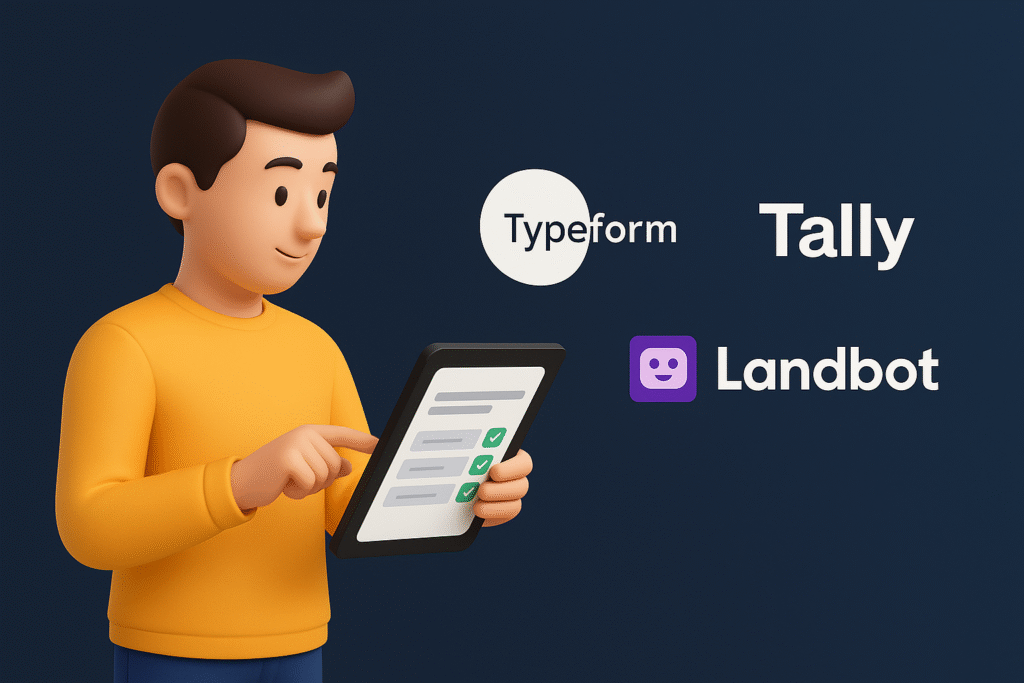
You can run the survey inside ChatGPT, or use tools like:
Connect these with Make.com or Zapier for automation, and store responses in Airtable.
Step 4: Add Personalization with ChatGPT Memory or Custom GPTs
With Custom GPTs or Memory, you can:
- Remember names and preferences during the survey
- Adjust tone based on responses
- Send personalized follow-ups
Step 5: Test and Deploy
Before going live:
- Test all branches of the conversation
- Check for logical dead-ends
- Ensure all data captures correctly
Deploy on:
- Your website chatbot widget
- Email campaigns
- In-app onboarding
- Social media DMs
Use Cases for Conversational Surveys
- Customer satisfaction (CSAT, NPS)
- Product feedback after purchase
- Employee engagement checks
- Pre-event or post-event surveys
- Lead qualification in sales funnels
Final Thoughts
Conversational surveys with ChatGPT make data collection more human, engaging, and actionable. By replacing static forms with friendly interactions, you can boost completion rates and gather richer insights.
Whether for customer feedback, employee engagement, or lead qualification, conversational surveys are the future of intelligent data collection.